
COVID-19: DiLX prioritizes the safety of its employees and customers - Learn More
logo
  • (English) InsightsOpen in new tab
  • Careers
  • Sectors We Serve
    • Automotive Ecosystem
    • Overview
    • Retail
    • Manufacturers & Importers
    • Dealers
    • Remarketing
    • Aftermarket
    • Independent Garages
    • Parts Groups
    • Service Maintenance and Repair
    • Mobility
    • Lease & Rentals
    • Fleet Operators
    • Insurance
  • AF-X Suite
    • What is AF-X?
    • Overview
    • AF-X Implementation
    • CONNECT
    • AF-X Spaces
    • AF-X 360
    • AF-X Sales
    • OPERATIONS
    • AF-X Service
    • AF-X Fleet
    • AF-X Parts
    • DATA
    • AF-X Intel
    • AF-X Connectors
    • AF-X Exchange
  • Ready-to-Deploy
    • AF-X DealerOps
    • Smart Service Planner
    • Zero Touch Service
    • Digital Service Order
    • Showroom Sales
    • Lead To Order
    • C360
    • Leads Manager
    • AF-X Mobility
    • Fleet Operations
    • Lead to Order
    • Remarketing Platform
    • Stock Management
    • Car Rental
    • Customer Apps and Platform
    • AF-X Garage
    • Smart Service Planner
    • Digital Service Order
    • Zero Touch Service
    • Parts Stock Manager
    • Customer & Vehicle Management
    • Tyre Hotel & Service Booking
    • AF-X PartsCom
    • Product Information Management
    • Electronic Parts Catalogue
    • Parts Stock Manager
  • Consulting
    • Overview
    • Digital Transformation
    • Technology Strategy
    • Future Mobility
  • Services
    • DIGITAL ENGINEERING SERVICES
    • Product Engineering
    • Cloud Transformation
    • Digital Centre of Excellence
    • Intel Services
    • Cognitive BI
    • Connected
    • CYBERSECURITY
    • AutoSecure
    • STAFF AUGMENTATION
    • AutoMPS
  • About Us
    • Who We Are
    • Leadership Team
    • Corporate Social Responsibility
    • Alliance & Partners
    • Contact us
  • (English) Insights
  • Careers
  • Home
  • Segments ▾
    • OEMs & Importers
    • Dealers
    • Garage Chains
    • Fleet & Logistics
    • Lease & Rental
    • Insurance
    • Parts & Components
    • Collision Repairers
  • Automotive IT Trends ▾
    • All Trends
    • Big Data
    • Cloud Computing
    • Connected Cars
    • IoT
    • Machine Learning & AI
    • Augmented Reality
  • Whitepapers
  • Case Studies
  • Newsletter
Home » Insights » The future of the modern car is actually digital

The future of the modern car is actually digital

Posted on mai 24, 2017  |  Category: Automotive IT Trends
The future of the modern car is actually digital
The technological and business model for autos is slowly but surely moving toward a software-and-services-focused approach.

A version of this essay was originally published at Tech.pinions, a website dedicated to informed opinions, insight and perspective on the tech industry.


The continuing evolution of the modern automobile is arguably one of the most exciting and most important developments in the tech world today. In fact, it’s probably one of the most important business and societal stories we’ve seen in some time.

 
If ever there was an industry ripe for disruption — and in need of a tech overhaul — the automotive industry is it.
 

The leadership at no less venerable a player than Ford Motor Co. obviously felt the same way — they just replaced their CEO, despite his long-term tenure with the company and the record-setting profits he helped drive during his three-year leadership there. The reason? Not enough progress on advancing the company’s cars forward in the technology domain, particularly with regard to electric vehicles, autonomous driving and new types of transportation service-focused business models.

As has been noted by many, these three capabilities — electrification, autonomy and cars as a service — are considered the key trends driving the auto market today and into the future, at least as far as Wall Street is concerned. In reality, the picture isn’t nearly that simple, but it is clear that tech-industry-driven initiatives are driving the agenda for today’s carmakers. And it’s pushing many of them into uncomfortable positions.

It turns out, however, that in spite of the importance of this critical evolution of automobiles, this is one of those issues that’s a lot harder to overcome than it first appears.
Part of the problem is that as cars have advanced and various technologies have been integrated into them, they’ve evolved into enormously complex machines. Today’s automobiles have as many as 150 programmable computing elements (often called Electronic Control Units, or ECUs), surprisingly large (and heavy) amounts of wiring, numerous different types of electronic signaling and interconnect buses, and up to 100 millions of lines of software, in addition to the thousands of mechanical parts required to run a car. Frankly, it’s somewhat of a miracle that modern cars run as well as they do, although reports of technical glitches and other problems in newer cars do seem to be on the rise.
  In addition to the mechanical and computer architecture complexity of the cars themselves, the organizational and business model complexity of today’s car companies and the entire auto supply chain also contribute to the problem. Having evolved over the more than 100-year history of the automotive industry, the system of multiple Tier 1 suppliers, such as Harman, Delphi, Bosch and others, buying components from Tier 2 and Tier 3 suppliers down the chain and car brand OEMs (such as Ford) piecing together multiple subsystems from different combinations of Tier 1s to build their cars is notoriously complex.
But toss in the fact that there are often groups within the carmaker that are specifically responsible for a given ECU (such as, say, heating, air conditioning and other “comfort” controls) and whose jobs may be at risk if someone suggests that the company change to a simpler architecture in which they combined the functionality of multiple ECUs into a smaller, more manageable number and, well, you get the picture.
  If ever there was an industry ripe for disruption — and in need of a tech overhaul — the automotive industry is it. That’s why many traditional carmakers are concerned, and why many tech companies are salivating at a chance to get a piece of the multi-trillion-dollar global automotive industry.  
The technological and business model for autos is slowly but surely moving towards a software-and-services-focused approach.
 

It’s also why companies like Tesla have made such a splash. Despite its very modest sales, it is seen as a credible attempt to drive the kind of technological and organizational disruption that many people believe is necessary to transform the automotive industry. In truth, however, because of the inherent and ingrained nature of the auto supply chain, even Tesla has to follow many of the conventions of multiple Tier 1 suppliers, etc., that its rivals use. The problem is that deeply embedded.

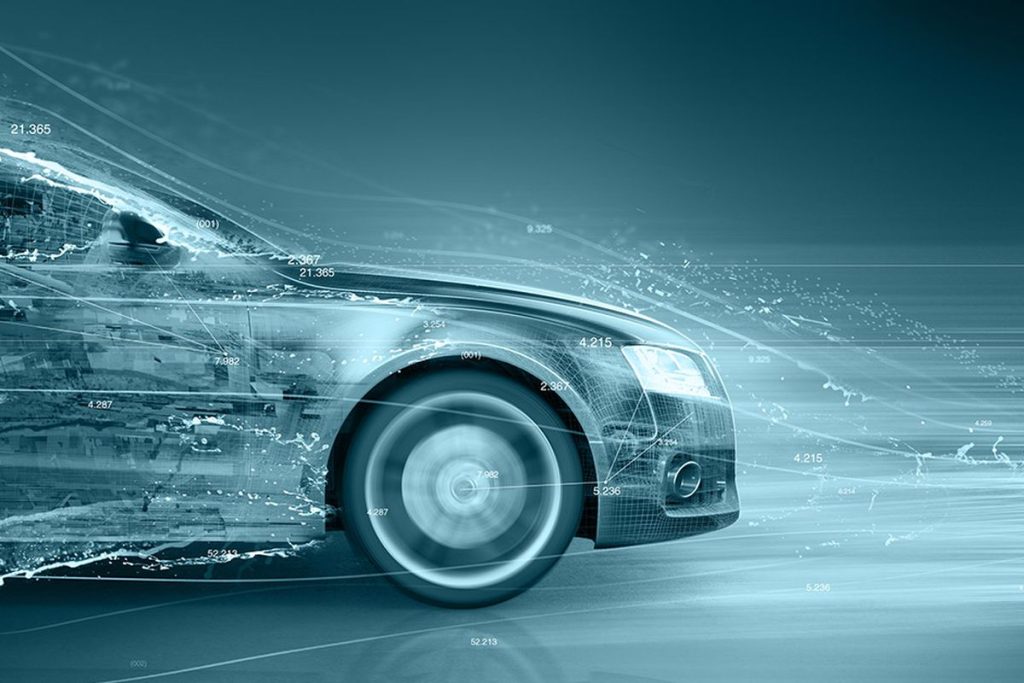
But even as those issues get addressed, they are really just a prelude to yet more innovations and opportunities for disruption. Like many modern computing devices — and, to be clear, that’s what today’s cars have become — the technological and business model for autos is slowly but surely moving toward a software-and-services-focused approach. In other words, we’re moving toward the software-defined “digital car.”
 

In order for that to happen, several key challenges need to be addressed. Most importantly, major enhancements in automotive security — both through architectural changes and software-driven advances — have to occur. The potential for life-threatening problems if either standard or autonomous cars get hacked should make this point painfully obvious.

Connectivity options, speed and reliability also have to be improved, and that’s where industry-wide efforts like 5G and specific products from vendors like Qualcomm and Intel can make a difference.

Finally, car companies and critical suppliers need to figure out the kinds of services that consumers will be willing to pay for and deliver platforms and architectures that can enable them. Like many other types of hardware devices, profit margins on cars are not very large, and with the increasing amount of technology they’re going to require, they could even start to shrink. As a result, car companies need to think through different ways of generating income.

Thankfully, a number of tech startups and established vendors, such as Harman, are working on creating cloud-based platform delivery systems for automotive services that are expected to start bringing these capabilities to life over the next several years.

As with any major transition, the move to a digital car model won’t be easy, fast or bump-free, but it’s bound to be an interesting ride.

Bob O’Donnell is the founder and chief analyst of Technalysis Research LLC, a technology consulting and market research firm that provides strategic consulting and market research services to the technology industry and professional financial community. Reach him @bobodtech.

 Courtesy of recode
Disclaimer: AutoFacets doesn't claim or takes credit for images/content/videos/whitepapers/etc. featured on its website. All images/content/videos/whitepapers/etc. are copyrighted to its respectful owners and are shared for informational purposes. This sharing is not intended to infringe the copyrights of respective authors.
Back to Insights

    (English)

    Head Offices

    nl The Netherlands
    Maria Montessorilaan 5,
    2719 DB Zoetermeer
    Phone: +31 (0) 79 3200 980

    indiaIndia
    8th Floor, Corporate House,
    Bodakdev, Ahmedabad - 380054
    Phone: +91 79 2685 2554

    For more details, write to us at:
    info@autofacets.com

    Find Us Near You!

    Global Offices

    • Belgium Belgium
    • Canada Canada
    • Denmark Denmark
    • Finland Finland
    • France France
    • Germany Germany
    • Iceland Iceland
    • Norway Norway
    • southafrica South Africa
    • Sweden Sweden
    • uaeUAE
    • UK UK
    • USA USA

    For more details, write to us at:
    info@autofacets.com

    Find Us Near You!

    AF-X Suite

    • Overview
    • AF-X Implementation
    • AF-X Spaces
    • AF-X 360
    • AF-X Sales
    • AF-X Service
    • AF-X Fleet
    • AF-X Parts
    • AF-X Intel
    • AF-X Connectors
    • AF-X Exchange

    Client Sectors

    • Overview
    • Retail
      • » Manufacturers & Importers
      • » Dealers
      • » Remarketing
    • Aftermarket
      • » Independent Garages
      • » Parts Groups
      • » Service Maintenance and Repair
    • Mobility
      • » Lease & Rentals
      • » Fleet Operators
      • » Insurance

    READY-TO-DEPLOY

    • AF-X Dealerops
    • AF-X Mobility
    • AF-X Garage
    • AF-X PartsCom

    Services

    • Digital Engineering Services
      • » Product Engineering
      • » Cloud Transformation
      • » Digital Centre of Excellence
    • Intel Services
      • » Cognitive BI
      • » Connected

    Consulting

    • Overview
    • Digital Transformation
    • Technology Consulting
    • Future Mobility

    Follow
    Our Thinking

    • LinkedInOpen in new tab
    • YouTubeOpen in new tab
    • TwitterOpen in new tab

    ABOUT US

    • Who We Are
    • Leadership Team
    • Corporate Social Responsibility
    • Alliance & Partners
    • Contact us

    © 2026 COPYRIGHT AutoFacets - All Rights Reserved.

    Privacy Policy | Terms of use | Disclaimer
    f logoOpen in new tab

    Sign up for our newsletter!

    close

      Let's Get in Touch

      close

        (English)

        Download Case Study

        close

          Please fill the form to download the case study.
          X
          We value your privacy.
           This website uses cookies and similar technologies to improve your browsing experience, measure our audience, collect useful information, and provide you with relevant content. By selecting “Accept & Continue”, you confirm that you provide your consent for the use of your information, and have read and agree to our Privacy Policy and Terms of Use. .
          Cookie settingsAccept & ContinueDecline
          Manage consent

          Privacy Overview

          This website uses cookies to improve your experience while you navigate through the website. Out of these cookies, the cookies that are categorized as necessary are stored on your browser as they are essential for the working of basic functionalities of the website. We also use third-party cookies that help us analyze and understand how you use this website. These cookies will be stored in your browser only with your consent. You also have the option to opt-out of these cookies. But opting out of some of these cookies may have an effect on your browsing experience.
          Necessary
          Toujours activé
          Necessary cookies are absolutely essential for the website to function properly. These cookies ensure basic functionalities and security features of the website, anonymously.
          CookieDuréeDescription
          cookielawinfo-checkbox-analytics11 monthsThis cookie is set by GDPR Cookie Consent plugin. The cookie is used to store the user consent for the cookies in the category "Analytics".
          cookielawinfo-checkbox-functional11 monthsThe cookie is set by GDPR cookie consent to record the user consent for the cookies in the category "Functional".
          cookielawinfo-checkbox-necessary11 monthsThis cookie is set by GDPR Cookie Consent plugin. The cookies is used to store the user consent for the cookies in the category "Necessary".
          cookielawinfo-checkbox-others11 monthsThis cookie is set by GDPR Cookie Consent plugin. The cookie is used to store the user consent for the cookies in the category "Other.
          cookielawinfo-checkbox-performance11 monthsThis cookie is set by GDPR Cookie Consent plugin. The cookie is used to store the user consent for the cookies in the category "Performance".
          viewed_cookie_policy11 monthsThe cookie is set by the GDPR Cookie Consent plugin and is used to store whether or not user has consented to the use of cookies. It does not store any personal data.
          Functional
          Functional cookies help to perform certain functionalities like sharing the content of the website on social media platforms, collect feedbacks, and other third-party features.
          Performance
          Performance cookies are used to understand and analyze the key performance indexes of the website which helps in delivering a better user experience for the visitors.
          Analytics
          Analytical cookies are used to understand how visitors interact with the website. These cookies help provide information on metrics the number of visitors, bounce rate, traffic source, etc.
          Advertisement
          Advertisement cookies are used to provide visitors with relevant ads and marketing campaigns. These cookies track visitors across websites and collect information to provide customized ads.
          Others
          Other uncategorized cookies are those that are being analyzed and have not been classified into a category as yet.
          Enregistrer et accepter