
COVID-19: DiLX prioritizes the safety of its employees and customers - Learn More
logo
  • BlogOpen in new tab
  • Careers
  • Branchen, die wir bedienen
    • Automotive-Ökosystem
    • Überblick
    • Einzelhandel
    • Hersteller und Importeure
    • Händler
    • Remarketing
    • Aftermarket
    • Unabhängige Garagen
    • Teilegruppen
    • Service, Wartung und Reparatur
    • Mobilität
    • Leasing & Vermietung
    • Flottenbetreiber
    • Versicherung
  • AF-X Suite
    • Was ist AF-X?
    • Übersicht
    • Implementierung von AF-X
    • VERBINDEN
    • AF-X-Räume
    • AF-X 360
    • AF-X Vertrieb
    • BETRIEB
    • AF-X Service
    • AF-X-Flotte
    • AF-X Parts
    • DATEN
    • AF-X Intel
    • AF-X-Steckverbinder
    • AF-X Exchange
  • Sofort einsatzbereit
    • AF-X DealerOps
    • Intelligenter Serviceplaner
    • Zero-Touch-Service
    • Digitale Dienstleistungsbestellung
    • Verkauf im Showroom
    • Bestellung aufgeben
    • C360
    • Leads-Manager
    • AF-X Mobilität
    • Flottenbetrieb
    • Bestellung aufgeben
    • Remarketing-Plattform
    • Lagerverwaltung
    • Autovermietung
    • Kunden-Apps und -Plattform
    • AF-X-Garage
    • Intelligenter Serviceplaner
    • Digitale Dienstleistungsbestellung
    • Zero-Touch-Service
    • Lagerverwalter für Ersatzteile
    • Kunden- und Fahrzeugverwaltung
    • Reifen-Hotel & Service-Buchung
    • AF-X PartsCom
    • Produktinformationsmanagement
    • Elektronik-Teilekatalog
    • Lagerverwalter für Ersatzteile
  • Beratung
    • Übersicht
    • Digitale Transformation
    • Technologiestrategie
    • Mobilität der Zukunft
  • Dienstleistungen
    • DIENSTLEISTUNGEN IM BEREICH DIGITALES ENGINEERING
    • Produktentwicklung
    • Cloud-Transformation
    • Kompetenzzentrum für Digitalisierung
    • Intel-Dienstleistungen
    • Kognitive BI
    • Verbunden
    • CYBERSICHERHEIT
    • AutoSecure
    • PERSONALVERSTÄRKUNG
    • AutoMPS
  • Über uns
    • Über uns
    • Führungsteam
    • Soziale Verantwortung von Unternehmen
    • Allianz & Partner
    • Kontaktieren Sie uns
  • Blog
  • Karriere
  • Home
  • Segments ▾
    • OEMs & Importers
    • Dealers
    • Garage Chains
    • Fleet & Logistics
    • Lease & Rental
    • Insurance
    • Parts & Components
    • Collision Repairers
  • Automotive IT Trends ▾
    • All Trends
    • Big Data
    • Cloud Computing
    • Connected Cars
    • IoT
    • Machine Learning & AI
    • Augmented Reality
  • Whitepapers
  • Case Studies
  • Newsletter
Home » Insights » Automotive disruption revisited – the shift from car ownership to mobile experiences

Automotive disruption revisited – the shift from car ownership to mobile experiences

Posted on Aug 21, 2017  |  Category: Automotive IT Trends
Automotive disruption revisited – the shift from car ownership to mobile experiences
SUMMARY: Are automotive incumbents doing enough to anticipate the disruption that’s coming? And why is that much-flogged term “big data” integral to new automotive business models? How will changes from ownership to on-demand autos impact urban planning? These are a few of the questions I posed to investor, blogger, and book author Evangelos Simoudis in our chat wrap.

In part one of my interview with Evangelos Simoudis on his new book, The Big Data Opportunity in Our Driverless Future. we left some sticky questions on the table. In this concluding installment of our back and forth, I ask Simoudis to parse the big data hype – and explain why it actually matters to autonomous vehicles.

We also get into infrastructure limitations, the problem of industry-wide standards, and whether the incumbents are doing enough to avoid their own disruption. Data is the real asset here, not vehicles – and that data will separate winners and losers based on the so-called “experiences” they can deliver.

Why big data actually matters to our automotive future

Jon Reed: We all understand that AI/machine learning will play a central role in autonomous vehicles, or as you put it, ACE (Autonomous Connected and Electrified vehicles). But you also bring in that trough-of-disillusionment buzzword, “big data.” In the book, you warn that even 5G broadband won’t be enough to support the data needs of advanced ACEs. Why is big data so important here, and what will need to happen to resolve the broadband/data volume issues?

Evangelos Simoudis: In autonomous vehicles and next-generation mobility, big data and AI go hand-in-hand. The vehicle with level five driving automation generates one GB per second of operation (Editor’s note: Wow!). To that, you have to add every other data that can be used for the improvement of the entire transportation experience, from traffic data to weather data to infotainment.

Some of this data has a short “half life.” Other data needs to be saved for longer time. Some data needs to be communicated in and out of the vehicle immediately and other can be stored on board and communicated occasionally, e.g., when the vehicle is charging. To deal with these issues I present a framework for organizing and reasoning about the various types of mobility-related data.

Reed: One data obstacle you mention is the need to establish industry-wide data protocols for the data layer these vehicles will require. I find myself skeptical that industry-wide data standards will be adopted. You?

Simoudis: Those involved in next-generation mobility have a very powerful example that should drive their thinking on this issue: the telco industry when smartphones started being introduced. At that time, telcos adopted a “walled garden” approach to data. The introduction of the iPhone and the services it enabled through a variety of applications, as well the expansion of the services offered by companies like Google, Facebook, Amazon and others took away the advantage telcos had through their subscriber data.

The automotive industry (OEMs, parts suppliers, etc.) are at a similar crossroads. If they choose to take a similar approach to that of telcos ten years ago, they run the risk of missing out on the opportunity provided to them by the big data generated in next-generation mobility. Just look at the partnerships that Uber is establishing and the types of data involved in such partnerships.

Disrupting the incumbents: the impediments of culture

Reed: In our 2015 chat, you said that the auto industry was genuinely concerned about Google, Tesla, Apple and Silicon Valley startups. For this reason, they have established innovation outposts in the Valley – and all of the major automakers are working on ACEs. How well are the incumbents doing with these Outposts since we last talked?

Simoudis: There is definitely a changing environment. More incumbents are establishing innovation outposts in Silicon Valley, Israel and a few other places – such as Berlin and Singapore – and they are increasing the size of these organizations and the variety of skillsets they include. They are also creating new companies to address next-generation mobility. My question remains whether even these improved efforts are adequate given what I feel will be the magnitude of the disruption.

Reed: You’ve said that “culture is a big impediment” for the incumbent players. What needs to change and how should they go about it?

Simoudis: I feel that most incumbents have not yet fully appreciated that next-generation mobility will rely less on car ownership and more on car access. As I indicate in the book, these companies will need to transition from being in the manufacturing business to being in the insights business, and through those insights provide superior transportation experiences.

Some incumbents such as Ford, BMW, Mercedes, GM and a few others have established new companies to address on-demand mobility. I’m assessing how these efforts are progressing, the level of support they will continue to get from the parent company and the level of influence they will have in the parent company. For me that will be the best indication that something is really changing.

Reed: Do you still believe that fleets of cars will be the first to push the ACE envelope? How will this work?

Simoudis: Indeed I think that fleets, whether of passenger cars or trucks, will be the first broader adopters of ACE vehicles. The reason is because the business model of ridesharing companies – and of long-haul logistics companies – can be dramatically impacted by the use of ACE vehicles. This is why startups like Peloton are attracting so much interest, and ride hailing companies like Uber and Grab have active ACE vehicle programs.

The best data and riding experience will win

Reed: One of your book readers commented that “ACE cars are sensing machines on wheels, generating massive amounts of data that the firms that run them can use to generate more value for their drivers and customers. The race to provide the best information layer is on, from maps to driver habits and beyond.” Are we going to see a point where the best data platform and UX is more valuable than the car itself?

Simoudis: As you move to shared mobility, the cabin becomes important – but the rest of the vehicle does not. The companies that are able to best personalize that cabin by trip purpose, passenger type, passenger mood, etc. will be preferred over those that offer a generic cabin environment. The rest of the vehicle will be important for economic reasons to the vehicle operator, very much like the airplane’s external characteristics and engine characteristics are important to the airline but not to the passenger.

The passenger cares about what is happening in the cabin: what are my entertainment options, how close are these options to my tastes, is my seating arrangement comfortable enough so that I can work during my trip, do I have internet access, etc.?

Reed: Won’t these changes eventually alter urban planning and how we conceive of cities themselves?

Simoudis: They absolutely will. Cities like Singapore and New York are already thinking about how autonomous vehicles and on-demand mobility will impact the planning of everything from new residential areas to transportation infrastructure.

Reed: How do you view the sensational security stories, such as hackers gaining access to car controls and navigation? How seriously should we take ACE security, and what are the best ways to address it?

Simoudis: This is a very big problem, and unfortunately we are just now starting to comprehend just how big of a problem exists. There is work that is being done to both determine how to retrofit existing vehicles and transportation infrastructure to make them more secure, but also how to safeguard the vehicles that will be introduced and the infrastructure that is being planned.

Reed: You’ve been heavily involved in evaluating startups in this space. Are there any ideas you are particularly excited about, or that surprised you?

Simoudis: I’m particularly excited about companies working on large-scale transportation data ingestion, cleaning, standardization and analysis/insight-geneation. For AI systems to work properly, the massive data sets we will start collecting and distributing among several clouds will need to be of specific quality. To this end, I’m particularly interested in the opportunities of next-generation mapping and navigation systems that will deal with real-time updates, and enable us to address the issues that will take us from the limited deployment of vehicles with level five driving automation, to their broad deployment and adoption.

End note: for those who are wondering about Simoudis’ views on alternative transportation beyond automotive, from bikes to trains to hyperloops, we covered that in our original piece two years ago.

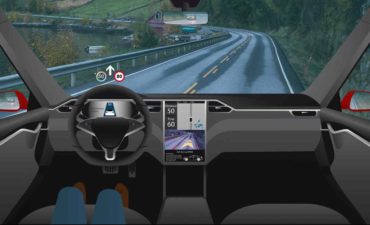
Image credit – Driverless car on the road. Vehicle with self-driving mode. © scharfsinn86 – Fotolia.com

Author – Jon Reed
Courtesy of Diginomica
Disclaimer: AutoFacets doesn't claim or takes credit for images/content/videos/whitepapers/etc. featured on its website. All images/content/videos/whitepapers/etc. are copyrighted to its respectful owners and are shared for informational purposes. This sharing is not intended to infringe the copyrights of respective authors.
Back to Insights

Lassen Sie uns gemeinsam Erlebnisse schaffen!

    Head Offices

    nl The Netherlands
    Maria Montessorilaan 5,
    2719 DB Zoetermeer
    Phone: +31 (0) 79 3200 980

    indiaIndia
    8th Floor, Corporate House,
    Bodakdev, Ahmedabad - 380054
    Phone: +91 79 2685 2554

    For more details, write to us at:
    info@autofacets.com

    Find Us Near You!

    Global Offices

    • Belgium Belgium
    • Canada Canada
    • Denmark Denmark
    • Finland Finland
    • France France
    • Germany Germany
    • Iceland Iceland
    • Norway Norway
    • southafrica South Africa
    • Sweden Sweden
    • uaeUAE
    • UK UK
    • USA USA

    For more details, write to us at:
    info@autofacets.com

    Find Us Near You!

    AF-X Suite

    • Overview
    • AF-X Implementation
    • AF-X Spaces
    • AF-X 360
    • AF-X Sales
    • AF-X Service
    • AF-X Fleet
    • AF-X Parts
    • AF-X Intel
    • AF-X Connectors
    • AF-X Exchange

    Client Sectors

    • Overview
    • Retail
      • » Manufacturers & Importers
      • » Dealers
      • » Remarketing
    • Aftermarket
      • » Independent Garages
      • » Parts Groups
      • » Service Maintenance and Repair
    • Mobility
      • » Lease & Rentals
      • » Fleet Operators
      • » Insurance

    READY-TO-DEPLOY

    • AF-X Dealerops
    • AF-X Mobility
    • AF-X Garage
    • AF-X PartsCom

    Services

    • Digital Engineering Services
      • » Product Engineering
      • » Cloud Transformation
      • » Digital Centre of Excellence
    • Intel Services
      • » Cognitive BI
      • » Connected

    Consulting

    • Overview
    • Digital Transformation
    • Technology Consulting
    • Future Mobility

    Follow
    Our Thinking

    • LinkedInOpen in new tab
    • YouTubeOpen in new tab
    • TwitterOpen in new tab

    ABOUT US

    • Who We Are
    • Leadership Team
    • Corporate Social Responsibility
    • Alliance & Partners
    • Contact us

    © 2026 COPYRIGHT AutoFacets - All Rights Reserved.

    Privacy Policy | Terms of use | Disclaimer
    f logoOpen in new tab

    Sign up for our newsletter!

    close

      Lassen Sie uns in Kontakt treten

      close

        Download Case Study

        close

          Please fill the form to download the case study.
          X
          We value your privacy.
           This website uses cookies and similar technologies to improve your browsing experience, measure our audience, collect useful information, and provide you with relevant content. By selecting “Accept & Continue”, you confirm that you provide your consent for the use of your information, and have read and agree to our Privacy Policy and Terms of Use. .
          Cookie settingsAccept & ContinueDecline
          Manage consent

          Privacy Overview

          This website uses cookies to improve your experience while you navigate through the website. Out of these cookies, the cookies that are categorized as necessary are stored on your browser as they are essential for the working of basic functionalities of the website. We also use third-party cookies that help us analyze and understand how you use this website. These cookies will be stored in your browser only with your consent. You also have the option to opt-out of these cookies. But opting out of some of these cookies may have an effect on your browsing experience.
          Necessary
          Immer aktiviert
          Necessary cookies are absolutely essential for the website to function properly. These cookies ensure basic functionalities and security features of the website, anonymously.
          CookieDauerBeschreibung
          cookielawinfo-checkbox-analytics11 monthsThis cookie is set by GDPR Cookie Consent plugin. The cookie is used to store the user consent for the cookies in the category "Analytics".
          cookielawinfo-checkbox-functional11 monthsThe cookie is set by GDPR cookie consent to record the user consent for the cookies in the category "Functional".
          cookielawinfo-checkbox-necessary11 monthsThis cookie is set by GDPR Cookie Consent plugin. The cookies is used to store the user consent for the cookies in the category "Necessary".
          cookielawinfo-checkbox-others11 monthsThis cookie is set by GDPR Cookie Consent plugin. The cookie is used to store the user consent for the cookies in the category "Other.
          cookielawinfo-checkbox-performance11 monthsThis cookie is set by GDPR Cookie Consent plugin. The cookie is used to store the user consent for the cookies in the category "Performance".
          viewed_cookie_policy11 monthsThe cookie is set by the GDPR Cookie Consent plugin and is used to store whether or not user has consented to the use of cookies. It does not store any personal data.
          Functional
          Functional cookies help to perform certain functionalities like sharing the content of the website on social media platforms, collect feedbacks, and other third-party features.
          Performance
          Performance cookies are used to understand and analyze the key performance indexes of the website which helps in delivering a better user experience for the visitors.
          Analytics
          Analytical cookies are used to understand how visitors interact with the website. These cookies help provide information on metrics the number of visitors, bounce rate, traffic source, etc.
          Advertisement
          Advertisement cookies are used to provide visitors with relevant ads and marketing campaigns. These cookies track visitors across websites and collect information to provide customized ads.
          Others
          Other uncategorized cookies are those that are being analyzed and have not been classified into a category as yet.
          Speichern und akzeptieren