COVID-19: DiLX prioritizes the safety of its employees and customers - Learn More
logo
  • BlogOpen in new tab
  • Careers
  • Branchen, die wir bedienen
    • Automotive-Ökosystem
    • Überblick
    • Einzelhandel
    • Hersteller und Importeure
    • Händler
    • Remarketing
    • Aftermarket
    • Unabhängige Garagen
    • Teilegruppen
    • Service, Wartung und Reparatur
    • Mobilität
    • Leasing & Vermietung
    • Flottenbetreiber
    • Versicherung
  • AF-X Suite
    • Was ist AF-X?
    • Übersicht
    • Implementierung von AF-X
    • VERBINDEN
    • AF-X-Räume
    • AF-X 360
    • AF-X Vertrieb
    • BETRIEB
    • AF-X Service
    • AF-X-Flotte
    • AF-X Parts
    • DATEN
    • AF-X Intel
    • AF-X-Steckverbinder
    • AF-X Exchange
  • Sofort einsatzbereit
    • AF-X DealerOps
    • Intelligenter Serviceplaner
    • Zero-Touch-Service
    • Digitale Dienstleistungsbestellung
    • Verkauf im Showroom
    • Bestellung aufgeben
    • C360
    • Leads-Manager
    • AF-X Mobilität
    • Flottenbetrieb
    • Bestellung aufgeben
    • Remarketing-Plattform
    • Lagerverwaltung
    • Autovermietung
    • Kunden-Apps und -Plattform
    • AF-X-Garage
    • Intelligenter Serviceplaner
    • Digitale Dienstleistungsbestellung
    • Zero-Touch-Service
    • Lagerverwalter für Ersatzteile
    • Kunden- und Fahrzeugverwaltung
    • Reifen-Hotel & Service-Buchung
    • AF-X PartsCom
    • Produktinformationsmanagement
    • Elektronik-Teilekatalog
    • Lagerverwalter für Ersatzteile
  • Beratung
    • Übersicht
    • Digitale Transformation
    • Technologiestrategie
    • Mobilität der Zukunft
  • Dienstleistungen
    • DIENSTLEISTUNGEN IM BEREICH DIGITALES ENGINEERING
    • Produktentwicklung
    • Cloud-Transformation
    • Kompetenzzentrum für Digitalisierung
    • Intel-Dienstleistungen
    • Kognitive BI
    • Verbunden
    • CYBERSICHERHEIT
    • AutoSecure
    • PERSONALVERSTÄRKUNG
    • AutoMPS
  • Über uns
    • Über uns
    • Führungsteam
    • Soziale Verantwortung von Unternehmen
    • Allianz & Partner
    • Kontaktieren Sie uns
  • Blog
  • Karriere
  • Home
  • Segments ▾
    • OEMs & Importers
    • Dealers
    • Garage Chains
    • Fleet & Logistics
    • Lease & Rental
    • Insurance
    • Parts & Components
    • Collision Repairers
  • Automotive IT Trends ▾
    • All Trends
    • Big Data
    • Cloud Computing
    • Connected Cars
    • IoT
    • Machine Learning & AI
    • Augmented Reality
  • Whitepapers
  • Case Studies
  • Newsletter
Home » Insights » Six Applications for Blockchain in Automotive

Six Applications for Blockchain in Automotive

Posted on Dez 27, 2017  |  Category: Automotive IT Trends
Six Applications for Blockchain in Automotive
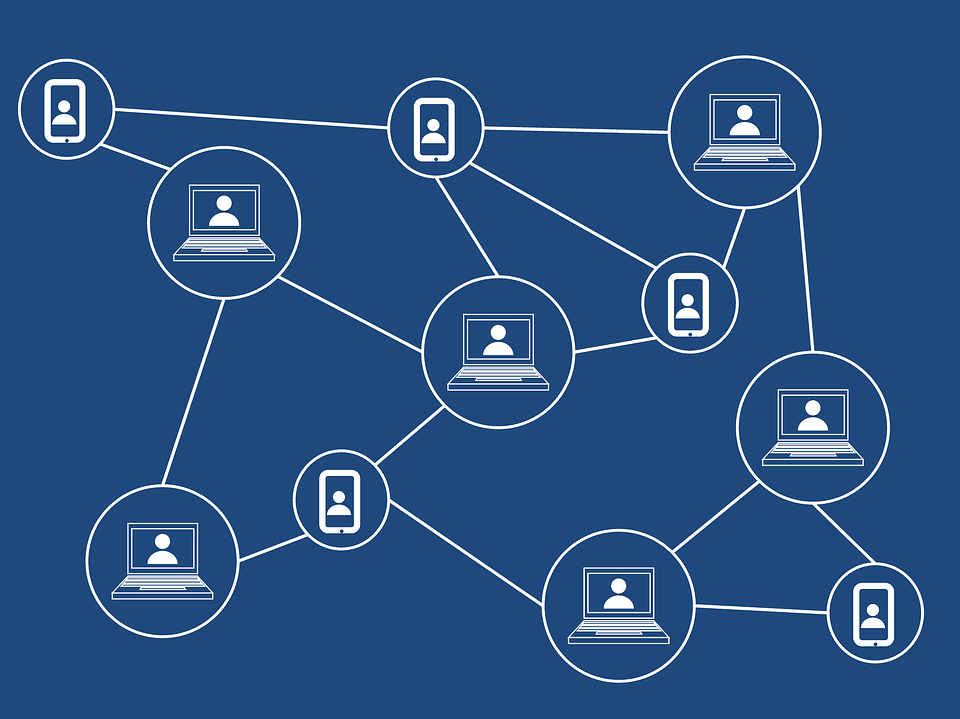
Since the advent of cars, the automotive industry has always embraced technological advances, but the pace of change has accelerated so rapidly that auto original equipment manufacturers (OEMs) worldwide are struggling to keep up. It is not just connected cars, or even autonomous cars that manufacturers are racing to [safely] bring to market; it is not just 5G connectivity shifting narratives around smart city interactions or in-car experiences; it is not just car-sharing and new business models with which they are experimenting; and it is not just artificial intelligence (AI) or computer vision for which they are recruiting talent. Automotive manufacturers are now facing another potentially transformational technology: blockchain. Tractica defines blockchain as a series of technologies that enable distributed database architecture, wherein the record and verification of a transaction or event relies on multiple parties agreeing on the validity of that transaction, rather than relying on a single centralized authority. Although blockchain has been subject to more hype than actual in-production, at-scale applications, the technology has undergone rapid developmental steps in the last 3 years. Blockchain technologies offer auto manufacturers, as well as numerous other constituencies across the automotive ecosystem, a range of potential benefits. In fact, blockchain may serve as a key enabler for autonomous cars because it has the potential to facilitate commerce between cars and other devices in scalable architectures and ensure repeatable outcomes/expectations. This is required to: 1) establish value and 2) define trust between stakeholders and machines, both of which are limited in the Internet of Things (IoT) as it exists today. Tractica’s research identifies 30 distinct use case categories, across virtually every industry. Below are a few of the use cases Tractica has identified for companies in the automotive sector to extract value from ledgers distributed and shared among one another.

Automotive/Internet of Things Interactions

A future of autonomous cars, not to mention “millions or billions” of devices communicating with each other efficiently requires that their interactions and transactions exist on an immutable database of shared, secure, and highly permissioned access. As one example, a shared ledger between automotive OEMs, parts distributors, dealerships, service mechanics, insurance providers, and others could support the ability for parts or equipment within a car to autonomously sense its own needs. For instance, a car could advise the driver about the need for repair, contact remote users for updates or nearby suppliers for replacement parts, negotiate pricing and appointments for service and repairs, authenticate the proper technician, and process the respective payment for services. An early example of blockchain supporting transparency across the above interactions was recently announced by Renault. The French automaker is piloting a digitized car maintenance program, which uses blockchain as a shared ledger to log all car repair and maintenance history in one place. The next pilot, it says, will focus on vehicle-based microtransactions – essential to integrating the IoT with the exchange of value. Oaken Innovation recently demonstrated the idea of a blockchain-enabled tollbooth, in which Tesla cars automatically pay as they pass through toll booths, as both nodes (car and tollbooth) have ethereum nodes, which use smart contracts to trigger a machine-to-machine (M2M) transaction.

Auto Financing

Whether an individual, institution, or dealer, few can afford to purchase cars outright; instead, purchasing cars typically requires loans to finance the transaction. Although financing varies somewhat by the nature of the transaction, typical auto financing includes a host of verification steps to which blockchain could be applied for efficiency gains: customer bank validation along multiple phases of transaction setup and execution (in compliance with know your customer [KYC] and anti-money laundering [AML] regulations); issuing letters of credit; review of multiple documents sourced from different locations; investigating actors’ legal structures; scoring and classifying risk; archiving of reviewed documents; etc. In the spring of 2017, Indian automotive OEM Mahindra, created a blockchain incubator focused specifically on the automotive financing use case.

Automotive Title Transfer

The process of transferring ownership from buyer to seller of an asset – a car or other form of property – is one that requires numerous middlemen, phases, and reconciliations to execute. Property records and the “chain of title,” which include leases, titles of ownership, encumbrances, etc., are usually stored in title plants at the county level, which must be maintained and require significant labor resources (thus, higher fees) to search and curate in order to verify a transaction. Blockchain could be applied here to streamline this process, not only by digitizing and securing titles – many titles today are paper-based – but by expediting the time needed to authenticate, validate, and transfer ownership of specific assets. A company called BigChainDB is developing CarPass in an effort to centralize all information about a car to a shared immutable and transparent database, immune to fraud or tampering. The pass would include title, service providers, prior damage, maintenance, and inspection history, but telemetry and sensor data introduce all manner of possibility in what could be registered on such a ledger. The concept was born in a hackathon in which energy company Innogy, BigChainDB, and Volkswagen Financial Services (VWFS) conceptualize what could be included in a car’s digital record involving telematics data, device data, and financial services data logged onto a blockchain.

Insurance Claim Processing

The current claims process requires extensive manual documentation, submission, and review resources to verify a claim. Entering these events on a distributed ledger could streamline both claims processing as well as subsequent payouts and service contracts associated with financing and executing repairs. Automotive OEMs could potentially use blockchain technologies like smart contracts or private keys to streamline the filing of certain insurance claims, automatically deploy service technicians, or automate payout.

Supply Chain Management

A supply chain consists of all entities and processes involved in getting an item from raw materials to final product for use. Supply chain processes today are opaque, generally not well understood beyond a few degrees of separation, yet made up of ever-growing and evolving networks of products, people, and counterparties. The automotive supply chain is incredibly complex, consisting of numerous types of parts, hardware, software, and firmware suppliers, distributors, dealers, regulatory agencies, insurance companies, and more. Blockchain technologies can be applied to each of the following phases of the supply chain:
  • Product inception
  • Product development
  • Product distribution
  • Product trade financing
  • Product retail and use
  • Product recycling/aftermarket
Various blockchain technologies could also be applied along multiple phases. Security, identity, and permissioning impact anti-counterfeit measures in the supply chain; smart contracts, oracles, and custom code support security and compliance adherence; decentralization allows multiple parties to be involved in any supply chain to participate in shared (permissioned) record-keeping and reference data; and payments and contracts transfer to expedite reconciliation of the deal and the transfer of money and assets from one party to another. Toyota Research Institute (TRI) recently unveiled a three-pronged strategy (and a slew of partnershipsto reinforce it) in which they see blockchain technology as underpinning data sharing, ride-sharing transactions, and user-based insurance. While this inherently includes numerous use cases impacting supply chain automation and otherwise, Toyota sent a signal to the market loud and clear: it views blockchain as the enabler for vehicles to receive and carry out all manner of instructions and transactions autonomously, and across multiple constituencies.

Loyalty-Based Microtransactions

Rewards programs are a common tool for driving customer engagement, retention, and additional revenue across a variety of sectors, including financial services, retailers, airlines, hotels, grocery, gaming, restaurant, car rental providers, cruises, fuel/convenience stores, and others. But today’s programs leave much to be desired on both sides: for businesses, points go unused and one-time sign-ups do not drive loyalty; for consumers, loyalty programs are rarely integrated and the ability to accrue value is limited. As businesses are awakening to the opportunity to leverage data for highly contextual marketing, the autonomous car represents the next mobile platform, particularly as passengers do more sitting than driving. Companies like loyyal recognize the need for a shared database to manage high volumes of transactions and enable permissioned access and program execution so that loyalty engagements serve both consumers and the numerous organizations with which they interact.

Industry Consortia Emerging as Critical Catalysts of Blockchain

Believe it or not, these use cases are but the tip of the iceberg for potential blockchain applications within the automotive space. That said, scalability, security, and low standardization across the industry remain significant hurdles. The primary challenge facing commercial blockchain in automotive is the sheer number of parties that would need to adopt decentralized ledgers. This, in addition to dynamic and geographically variable regulatory regimes, is why we are seeing industry consortia emerge as critical catalysts in the blockchain space. Toyota recently announced that it is building its own consortium, and that it is also part of R3. Daimler AG joined the Hyperledger project. Meanwhile, the Blockchain IoT Consortium has come together with the sole purpose of coordinating the universe of IoT suppliers around new blockchain-powered use cases. More and more, Tractica expects automotive OEMs to take steps toward blockchain, with industry leaders accelerating their own efforts. The broader the network adoption, the greater the value and efficiency; the inverse of which is also true.
Author – Jessica Groopman Courtesy of Tractica 

Disclaimer: AutoFacets doesn't claim or takes credit for images/content/videos/whitepapers/etc. featured on its website. All images/content/videos/whitepapers/etc. are copyrighted to its respectful owners and are shared for informational purposes. This sharing is not intended to infringe the copyrights of respective authors.
Back to Insights

Lassen Sie uns gemeinsam Erlebnisse schaffen!

    Head Offices

    nl The Netherlands
    Maria Montessorilaan 5,
    2719 DB Zoetermeer
    Phone: +31 (0) 79 3200 980

    indiaIndia
    8th Floor, Corporate House,
    Bodakdev, Ahmedabad - 380054
    Phone: +91 79 2685 2554

    For more details, write to us at:
    info@autofacets.com

    Find Us Near You!

    Global Offices

    • Belgium Belgium
    • Canada Canada
    • Denmark Denmark
    • Finland Finland
    • France France
    • Germany Germany
    • Iceland Iceland
    • Norway Norway
    • southafrica South Africa
    • Sweden Sweden
    • uaeUAE
    • UK UK
    • USA USA

    For more details, write to us at:
    info@autofacets.com

    Find Us Near You!

    AF-X Suite

    • Overview
    • AF-X Implementation
    • AF-X Spaces
    • AF-X 360
    • AF-X Sales
    • AF-X Service
    • AF-X Fleet
    • AF-X Parts
    • AF-X Intel
    • AF-X Connectors
    • AF-X Exchange

    Client Sectors

    • Overview
    • Retail
      • » Manufacturers & Importers
      • » Dealers
      • » Remarketing
    • Aftermarket
      • » Independent Garages
      • » Parts Groups
      • » Service Maintenance and Repair
    • Mobility
      • » Lease & Rentals
      • » Fleet Operators
      • » Insurance

    READY-TO-DEPLOY

    • AF-X Dealerops
    • AF-X Mobility
    • AF-X Garage
    • AF-X PartsCom

    Services

    • Digital Engineering Services
      • » Product Engineering
      • » Cloud Transformation
      • » Digital Centre of Excellence
    • Intel Services
      • » Cognitive BI
      • » Connected

    Consulting

    • Overview
    • Digital Transformation
    • Technology Consulting
    • Future Mobility

    Follow
    Our Thinking

    • LinkedInOpen in new tab
    • YouTubeOpen in new tab
    • TwitterOpen in new tab

    ABOUT US

    • Who We Are
    • Leadership Team
    • Corporate Social Responsibility
    • Alliance & Partners
    • Contact us

    © 2026 COPYRIGHT AutoFacets - All Rights Reserved.

    Privacy Policy | Terms of use | Disclaimer
    f logoOpen in new tab

    Sign up for our newsletter!

    close

      Lassen Sie uns in Kontakt treten

      close

        Download Case Study

        close

          Please fill the form to download the case study.
          X
          We value your privacy.
           This website uses cookies and similar technologies to improve your browsing experience, measure our audience, collect useful information, and provide you with relevant content. By selecting “Accept & Continue”, you confirm that you provide your consent for the use of your information, and have read and agree to our Privacy Policy and Terms of Use. .
          Cookie settingsAccept & ContinueDecline
          Manage consent

          Privacy Overview

          This website uses cookies to improve your experience while you navigate through the website. Out of these cookies, the cookies that are categorized as necessary are stored on your browser as they are essential for the working of basic functionalities of the website. We also use third-party cookies that help us analyze and understand how you use this website. These cookies will be stored in your browser only with your consent. You also have the option to opt-out of these cookies. But opting out of some of these cookies may have an effect on your browsing experience.
          Necessary
          Immer aktiviert
          Necessary cookies are absolutely essential for the website to function properly. These cookies ensure basic functionalities and security features of the website, anonymously.
          CookieDauerBeschreibung
          cookielawinfo-checkbox-analytics11 monthsThis cookie is set by GDPR Cookie Consent plugin. The cookie is used to store the user consent for the cookies in the category "Analytics".
          cookielawinfo-checkbox-functional11 monthsThe cookie is set by GDPR cookie consent to record the user consent for the cookies in the category "Functional".
          cookielawinfo-checkbox-necessary11 monthsThis cookie is set by GDPR Cookie Consent plugin. The cookies is used to store the user consent for the cookies in the category "Necessary".
          cookielawinfo-checkbox-others11 monthsThis cookie is set by GDPR Cookie Consent plugin. The cookie is used to store the user consent for the cookies in the category "Other.
          cookielawinfo-checkbox-performance11 monthsThis cookie is set by GDPR Cookie Consent plugin. The cookie is used to store the user consent for the cookies in the category "Performance".
          viewed_cookie_policy11 monthsThe cookie is set by the GDPR Cookie Consent plugin and is used to store whether or not user has consented to the use of cookies. It does not store any personal data.
          Functional
          Functional cookies help to perform certain functionalities like sharing the content of the website on social media platforms, collect feedbacks, and other third-party features.
          Performance
          Performance cookies are used to understand and analyze the key performance indexes of the website which helps in delivering a better user experience for the visitors.
          Analytics
          Analytical cookies are used to understand how visitors interact with the website. These cookies help provide information on metrics the number of visitors, bounce rate, traffic source, etc.
          Advertisement
          Advertisement cookies are used to provide visitors with relevant ads and marketing campaigns. These cookies track visitors across websites and collect information to provide customized ads.
          Others
          Other uncategorized cookies are those that are being analyzed and have not been classified into a category as yet.
          Speichern und akzeptieren